How to Prepare for an Unmedicated Birth in Charlotte, NC
October 28, 2026
If you’re pregnant and hoping for an unmedicated birth in Charlotte, North Carolina, you might be wondering how to actually prepare for one.
Maybe you’ve been researching natural childbirth, looking into different hospitals, or wondering whether you can really manage labor without an epidural.
The truth is, preparing for an unmedicated birth involves so much more than having a high pain tolerance.
It’s about understanding how labor works, learning techniques to manage contractions, building a supportive birth team, and creating an environment where you feel safe, informed, and confident.
As a former Labor & Delivery nurse, birth doula, and mom of three, I’ve seen firsthand how preparation and continuous support can shape a woman’s birth experience.
At What The Bump CLT, our experienced team of birth doulas, Registered Nurses, and former Labor & Delivery nurses helps Charlotte families prepare for the birth experience they envision.
Whether you’re planning your first unmedicated birth or hoping for a different experience this time around, here are some of our favorite ways to prepare.
1. Understand What Happens During Unmedicated Labor
One of the most important things you can do before giving birth is understand the normal progression of labor.
When you know what’s happening inside your body, contractions can feel less frightening and more purposeful.
Labor is generally divided into three stages, with the first stage including early labor, active labor, and transition.
Early labor: Contractions may be mild or irregular initially and gradually become stronger and more consistent. Many women can still talk, walk, eat, rest, and move comfortably during this stage.
Active labor: Contractions become stronger, longer, and more frequent. You’ll likely need to focus more intentionally on breathing, relaxation, movement, and coping techniques.
Transition: The final part of the first stage of labor can be especially intense. Some women experience shaking, nausea, pressure, or feelings of doubt.
It’s common to hear women say, “I can’t do this anymore” during intense labor! Do not let having these thoughts scare you- you CAN do this!
Understanding these changes ahead of time can help you recognize what’s normal and know when to ask your care team for additional support.
And remember, labor doesn’t follow an exact timeline. Every woman’s experience is different.
Our Charlotte birth doula services include prenatal preparation and childbirth education designed to help you understand the labor process before your big day.
2. Choose a Birth Team That Supports Your Goals
If you’re planning an unmedicated hospital birth in Charlotte, choosing a supportive OB-GYN or midwife is incredibly important.
Not every provider approaches labor and birth the same way.
During prenatal appointments, consider asking questions such as:
- How do you support patients who want an unmedicated birth?
- Will I be encouraged to move freely and change positions during labor?
- What are your policies regarding eating and drinking during labor?
- Are intermittent fetal monitoring options available when medically appropriate?
- Can I labor in the shower or use a birth ball?
- How do you approach labor that is progressing slowly?
- What options are available if I want to avoid unnecessary interventions?
Having these conversations during pregnancy can help you understand your provider’s approach before you’re in labor.
At What The Bump CLT, we encourage families to choose providers who value informed consent, shared decision-making, and individualized care.
You deserve to understand your options and feel respected throughout your birth experience.
If you’re still building your birth team, you can meet our experienced Charlotte birth doulas and learn about their nursing backgrounds, birth experiences, and approaches to care.
3. Research Your Charlotte Birth Hospital
Your birth environment can make a meaningful difference in how comfortable and supported you feel during labor.
If you’re planning an unmedicated birth in Charlotte, consider touring your hospital or asking about its labor and delivery amenities.
Charlotte-area hospitals include:
- Novant Health Presbyterian Medical Center
- Novant Health Matthews Medical Center
- Novant Health Huntersville Medical Center
- Novant Health Ballantyne Medical Center
- Atrium Health Carolinas Medical Center
- Atrium Health Pineville
- Atrium Health University City
- Natural Beginnings Birth Center
When comparing hospitals, ask whether they offer showers, birth balls, peanut balls, wireless fetal monitoring, and opportunities for movement during labor.
You may also want to ask about their policies regarding doulas, labor positions, and immediate skin-to-skin contact after delivery.
Our team supports families giving birth at hospitals throughout Charlotte and the surrounding communities. One of the benefits of working with an experienced local doula is having someone familiar with the hospital environment who can help you navigate your options.
You can explore the Charlotte hospitals where our birth doulas provide support and learn more about our experience supporting hospital births.
4. Practice Comfort Measures Before Labor Begins
One of the biggest misconceptions about unmedicated birth is that you simply have to tolerate contractions.
In reality, there are many ways to work with your body during labor.
Some of our favorite comfort measures include:
Movement and position changes
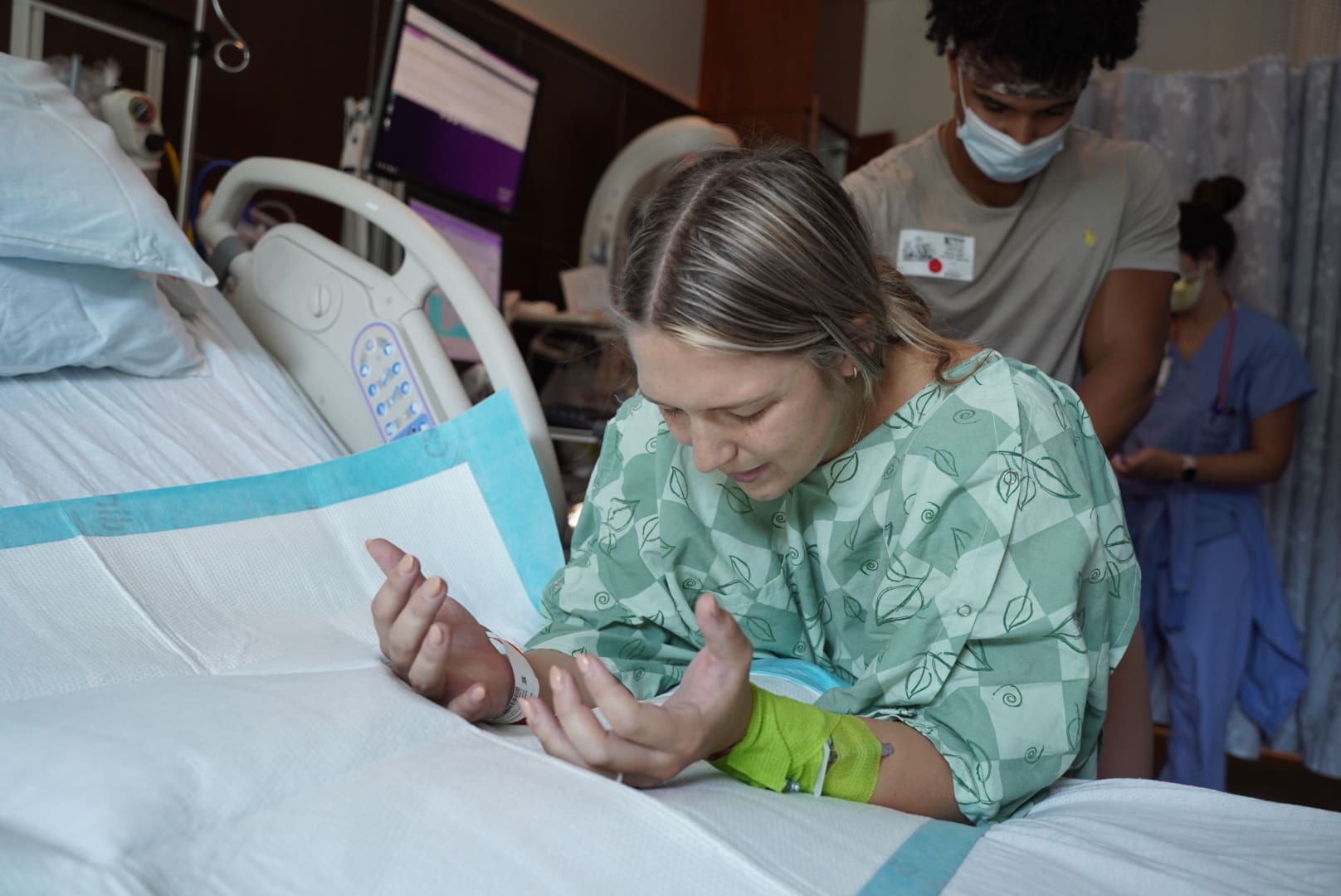
Walking, swaying, rocking on a birth ball, leaning forward, and using hands-and-knees positions may help you find comfort as labor progresses.
Counterpressure
Firm pressure applied to the lower back or hips can be especially helpful for women experiencing back labor.
Hydrotherapy
A warm shower or bath, when available and appropriate, can encourage relaxation and provide relief during contractions.
Breathing techniques
Slow, intentional breathing can help reduce tension and give you something to focus on as contractions intensify.
Massage and physical touch
Some women find gentle massage incredibly comforting, while others prefer firm pressure or no touch at all.
A calm environment
Dim lighting, familiar music, minimal distractions, and supportive voices can help create a more peaceful labor environment.
You don’t need to master every technique.
The goal is to become familiar with several options so you can discover what feels best for your body.
Our birth doula clients receive access to a comprehensive birth support package, including personalized prenatal visits, childbirth education, and hands-on preparation for labor.
5. Learn How to Relax Instead of Fighting Contractions
When contractions become intense, it’s natural to tense your muscles, hold your breath, or anticipate the next contraction.
But unnecessary muscle tension can make labor feel even more overwhelming.
Practicing relaxation techniques during pregnancy can help you become more aware of how your body responds to discomfort.
Try focusing on:
- Relaxing your jaw and shoulders
- Releasing tension in your hands
- Breathing slowly through contractions
- Using low, relaxed vocalizations
- Resting between contractions whenever possible
- Focusing on one contraction at a time
Many women find it helpful to remember that contractions come in waves.
They build, peak, and eventually fade.
Rather than thinking about how many hours of labor might remain, focus on working through the contraction you’re experiencing right now.
You don’t have to get through your entire labor at once. Just one contraction at a time.
6. Consider Hiring a Birth Doula in Charlotte, NC
If you’re hoping for an unmedicated birth, having continuous labor support can be incredibly valuable.
A birth doula provides emotional, physical, and educational support throughout pregnancy and childbirth.
During labor, your doula can help with:
- Breathing and relaxation techniques
- Counterpressure and massage
- Labor positions and movement
- Encouragement during challenging moments
- Supporting and involving your partner
- Helping you understand common interventions
- Communicating questions and preferences to your medical team
- Providing reassurance when labor takes an unexpected turn
Research has associated continuous labor support with improved birth experiences and certain positive birth outcomes.
At What The Bump CLT, many members of our birth doula team are Registered Nurses or former Labor & Delivery nurses.
That experience gives our team a unique understanding of both the emotional and practical aspects of hospital birth.
Our role as doulas is not to replace your medical providers or make medical decisions. It’s to provide consistent, personalized support while helping you feel informed and confident.
And while we love supporting unmedicated births, we never believe that the use of an epidural determines whether a birth was successful.
Your birth preferences matter, and so does your ability to change your mind.
Wondering whether a doula is really necessary?
Read our article: Is Hiring a Doula Worth It? What Charlotte Parents Should Know.
If you’re comparing birth support options, you may also find our 2026 Charlotte Doula Cost Guide helpful.
And when you’re ready, explore our birth doula support in Charlotte, NC to learn what makes our team different.
7. Prepare Your Partner for Their Role During Labor
Your partner doesn’t need to know everything about childbirth to be an incredible source of support.
But preparing together can make a significant difference.
Before labor, talk about what kind of support you think you’ll want.
Would you prefer encouragement and affirmations? Quiet reassurance? Physical touch? Help remembering your birth preferences?
Practice counterpressure and labor positions together.
Discuss how your partner can help create a calm environment and communicate with your care team.
One of our favorite parts of being birth doulas is supporting partners, too.
We can offer suggestions, demonstrate comfort measures, and help partners feel confident and involved.
Your doula doesn’t replace your partner.
We work together to make sure you feel supported from every direction.
If you’re curious about the difference between a doula’s role and your partner’s role, visit our Charlotte Doula Frequently Asked Questions.
8. Create Birth Preferences, Not a Rigid Birth Plan
Having birth preferences can be incredibly helpful, especially if you’re planning an unmedicated birth.
But birth is unpredictable, and flexibility is important.
Rather than creating a rigid list of things that must happen, consider outlining what matters most to you.
Your preferences might include:
- Freedom to move and change positions
- Avoiding routine interventions unless medically indicated
- Intermittent fetal monitoring when appropriate
- Access to water, ice chips, or food as permitted
- A calm, low-light environment
- Informed consent before procedures
- Delayed cord clamping
- Immediate skin-to-skin contact when possible
- Support for physiologic pushing and comfortable birth positions
Discuss your preferences with your OB-GYN or midwife before labor.
Remember that your birth preferences can change based on your comfort, your baby’s well-being, and how labor unfolds.
The goal isn’t to control every aspect of childbirth.
It’s to feel informed, respected, and involved in decisions about your care.
Need help creating your birth preferences?
Download our free Your Birth, Your Way: The Ultimate Birth Preferences Guide.
This resource is designed to help you explore your options and prepare for conversations with your birth team.
9. Take a Childbirth Education Class
Knowledge can be one of the most valuable tools you bring into labor.
A quality childbirth education class can help you understand the physiology of birth, common interventions, labor coping strategies, and what to expect during each stage.
Even if you’ve already had a baby, a refresher can be helpful, especially if you’re planning a different birth experience.
At What The Bump CLT, our birth doula clients receive access to comprehensive childbirth education, including a self-paced online learning portal, monthly virtual birth classes, and in person prenatal preparation with their doula.
We want you to enter labor feeling prepared rather than overwhelmed by unfamiliar decisions.
And preparation shouldn’t stop at delivery.
If you’re expecting your first baby, our Private Newborn Foundations Class in Charlotte, NC can help you feel confident about feeding, soothing, newborn sleep, and caring for your baby after birth.
We also offer daytime and overnight postpartum doula support for families who want additional hands-on help after bringing their baby home.
10. Remember That an Unmedicated Birth Isn’t a Test of Strength
This might be the most important thing we share with families preparing for an unmedicated birth.
There is nothing wrong with wanting to experience childbirth without pain medication.
And there is absolutely nothing wrong with deciding you want an epidural.
You can prepare extensively, practice every coping technique, hire an incredible birth team, and still experience a labor that looks completely different from what you imagined.
That doesn’t mean you failed.
It means birth is unpredictable.
Your strength isn’t measured by whether you receive pain medication.
It’s reflected in the decisions you make, the challenges you navigate, and the way you advocate for yourself throughout the experience.
We believe a positive birth experience is one where you feel supported, informed, and respected, regardless of how your baby arrives.
Frequently Asked Questions About Unmedicated Birth in Charlotte, NC
Can I have an unmedicated birth in a Charlotte hospital?
Yes! Many women choose to have unmedicated births in Charlotte-area hospitals. Discuss your preferences with your provider and ask about available comfort measures, mobility, monitoring options, and hospital policies.
Our Charlotte birth doulas support families at Novant Health and Atrium Health hospitals throughout the area.
Is it possible to give birth naturally without an epidural?
Yes. Many women give birth without epidural anesthesia. Preparation, continuous support, comfort measures, and a supportive care team can help you cope with labor, although everyone’s experience is different.
Should I hire a doula for an unmedicated birth?
A doula isn’t required, but many families find continuous labor support helpful. Doulas can provide physical comfort measures, emotional reassurance, education, and partner support throughout labor.
Learn more in our article, Is Hiring a Doula Worth It?.
What if I change my mind and want an epidural?
You can change your preferences during labor. Your care team can discuss available pain relief options and whether an epidural is possible based on your clinical circumstances. Choosing pain medication doesn’t take away from your birth experience.
When should I hire a birth doula in Charlotte?
Many families begin interviewing doulas during the second trimester, although you can reach out earlier or later. Booking in advance gives you more time to develop a relationship with your doula and prepare for birth.
You can contact our Charlotte doula team to discuss availability for your due date.
Planning an Unmedicated Birth in Charlotte? We’d Love to Support You.
At What The Bump CLT, we believe every woman deserves to feel confident, informed, and genuinely supported during childbirth.
Our experienced team of birth doulas, Registered Nurses, and former Labor & Delivery nurses provides personalized birth support throughout Charlotte, Huntersville, Matthews, Concord, Ballantyne, Cornelius, Davidson, and surrounding communities.
Whether you’re hoping for an unmedicated hospital birth, preparing for your first baby, or looking for a more supported experience this time around, we’d love to be part of your birth team.
Our Charlotte birth doula services include personalized prenatal visits, comprehensive childbirth education, continuous labor support, and postpartum follow-up.
You can also meet our birth doula team to learn more about the experienced women who support our families.
You don’t have to navigate birth preparation alone.
Schedule your free consultation with What The Bump CLT today.
Let’s talk about your birth goals, your hospital, and how our team can help you feel prepared for one of the most transformative experiences of your life.
Your birth. Your choices. Our support.


feel PREPARED
feel supported
feel CONFIDENT
FOLLOW US
hello@whatthebumpclt.com
What The Bump | Birth & Postpartum Doulas
Serving Charlotte, NC & surrounding communities
419-266-2346
